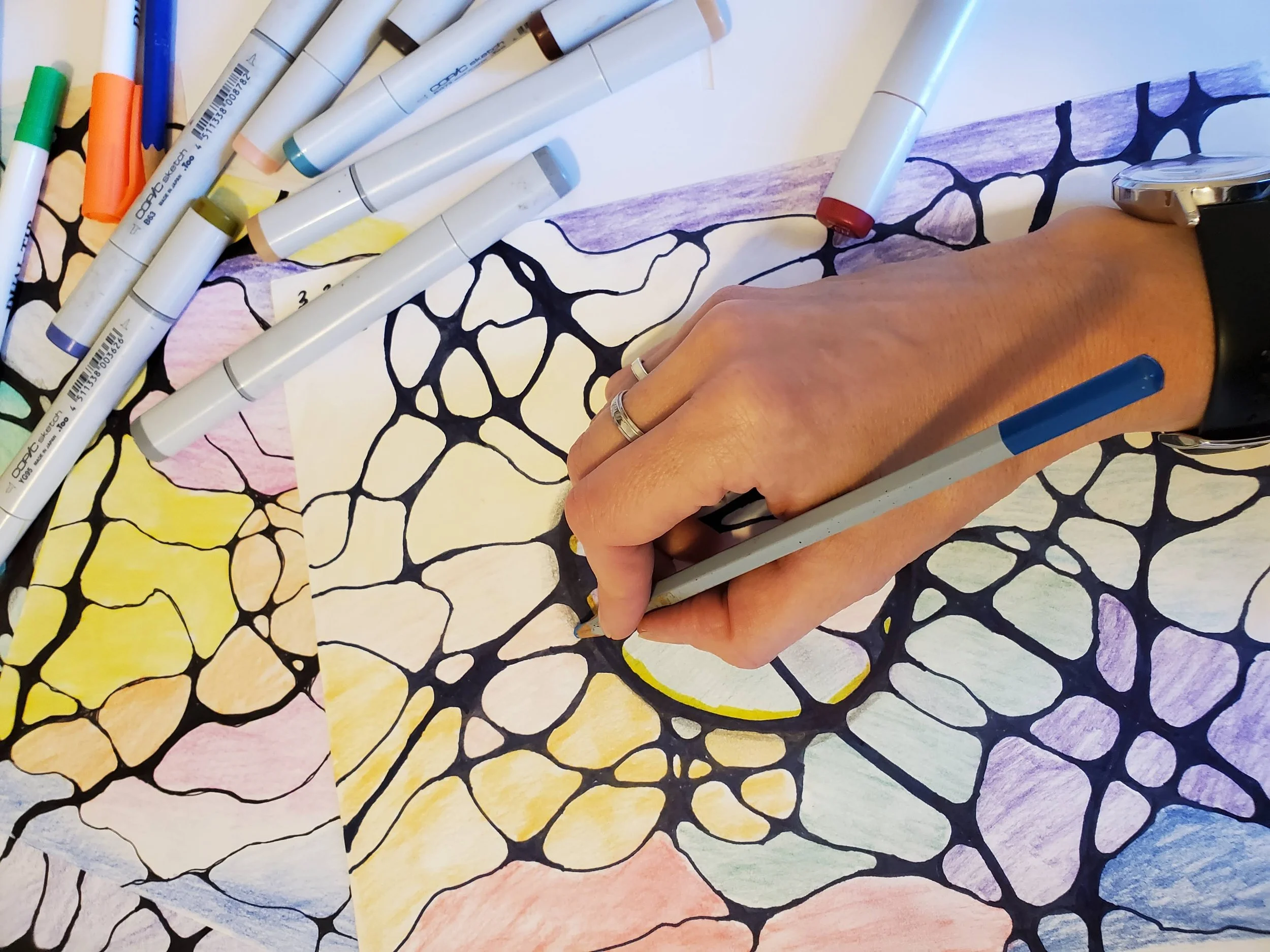
You don’t have to be able to visualize. You don’t have to be “good at art.” You just have to show up.
Many people who find their way to the Inner Drawing Room have tried other modalities — therapy, journaling, meditation, coaching — and found that something didn’t quite fit. Not because those approaches are wrong, but because their brain needed a different door in.
Embodied Drawing may be that door.
Video of Neurographic style drawing of a tree, using colored pencils and markers
Why It Works Differently
Most creative wellness practices ask you to imagine, visualize, or free-associate — skills that don’t come naturally to every brain. Embodied Drawing works the other way around. It starts with your hand, not your mind. You draw a line. You round a corner. You follow a step. The process leads; you follow. And somewhere in that following, something shifts.
This makes it particularly effective for people with:
• ADHD — the structured, sequential steps provide a container for restless energy without feeling restrictive
• Autism — clear instructions, predictable process, no ambiguity about what “right” looks like
• Aphantasia — no visualization required; everything is grounded in physical sensation and what’s on the page in front of you
• Anxiety — the repetitive, meditative quality of the drawing calms the nervous system before the mind has time to overthink
• Dyslexia and other learning differences — this is a non-verbal, non-written practice; language is never a barrier
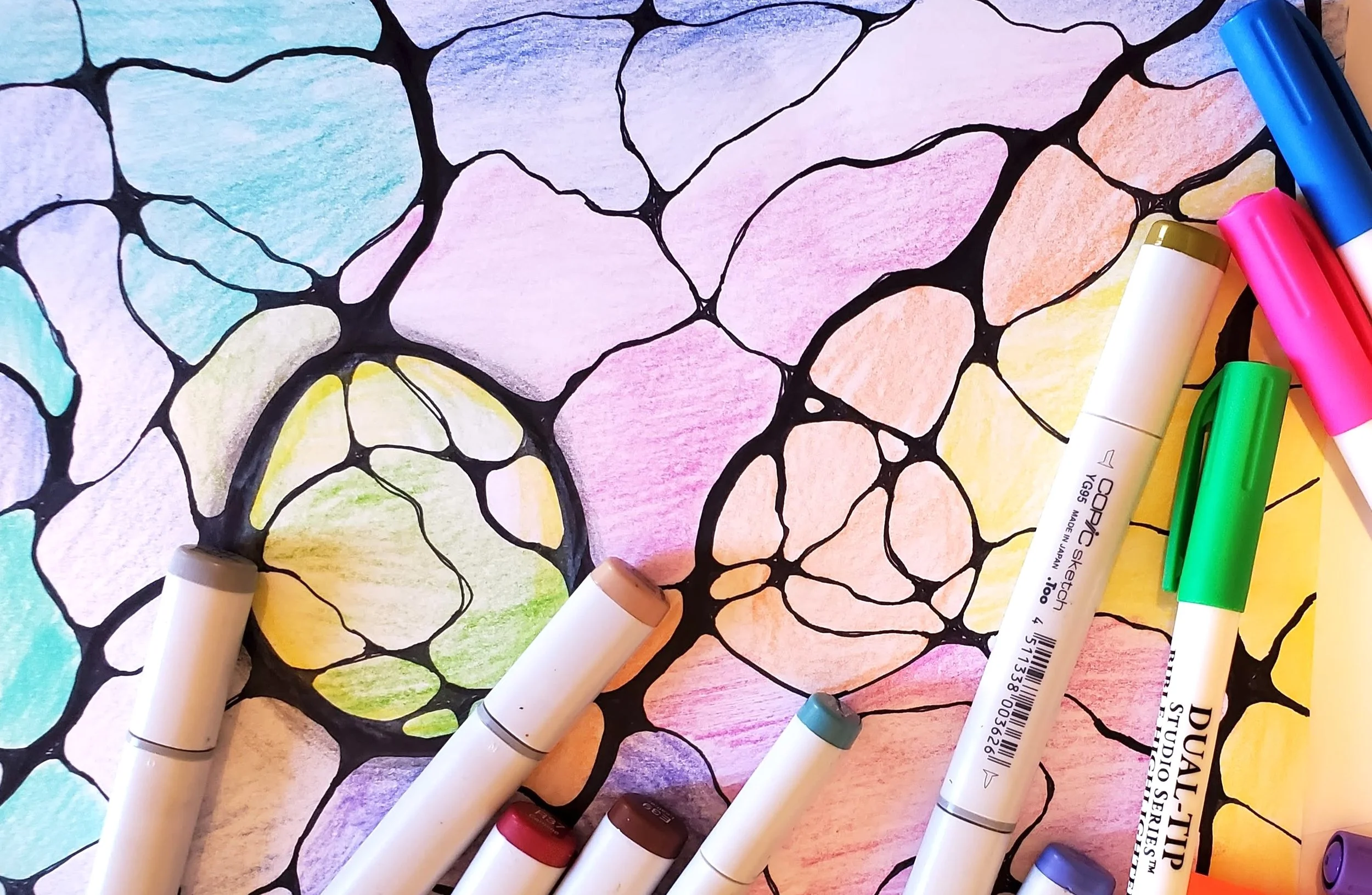
The goal isn’t art.
The goal is agency - the felt sense that you can notice something, create something, and choose what to do with it.
How Sessions Are Structured for You:
• Instructions are concrete and step-by-step. Nothing is left vague or open-ended unless you want it to be.
• There is no pressure to share, to perform, or to produce something that looks a certain way.
• You will never be compared to anyone else — because comparison isn’t part of the practice.
• Pacing is flexible. You move at your own speed, and Nadia moves with you.
• Every session includes a somatic opening — a moment to notice your body, your breath, your comfort — before any drawing begins.
• Sessions close with optional, low-pressure reflection. You choose how much or how little to share.
1:1 sessions are available for those who prefer individual pacing and more personalized guidance. In a private session, Nadia can be fully present with your specific needs, adapting instruction in real time to how you process and respond.
What to Expect in a Session:
Every session follows a gentle, predictable arc:
• Somatic opening (5–10 min) — Noticing your body, breath, and comfort. No visualization required.
• Guided Embodied Drawing (45–75 min) — Step-by-step process with verbal and visual cues. Nadia stays present and pauses whenever needed.
• Optional reflection (10–15 min) — What came up. What shifted. What you want to feel more of. Sharing is always a choice, never an expectation.
No artistic skill is required. No prior experience with drawing, mindfulness, or coaching is needed.